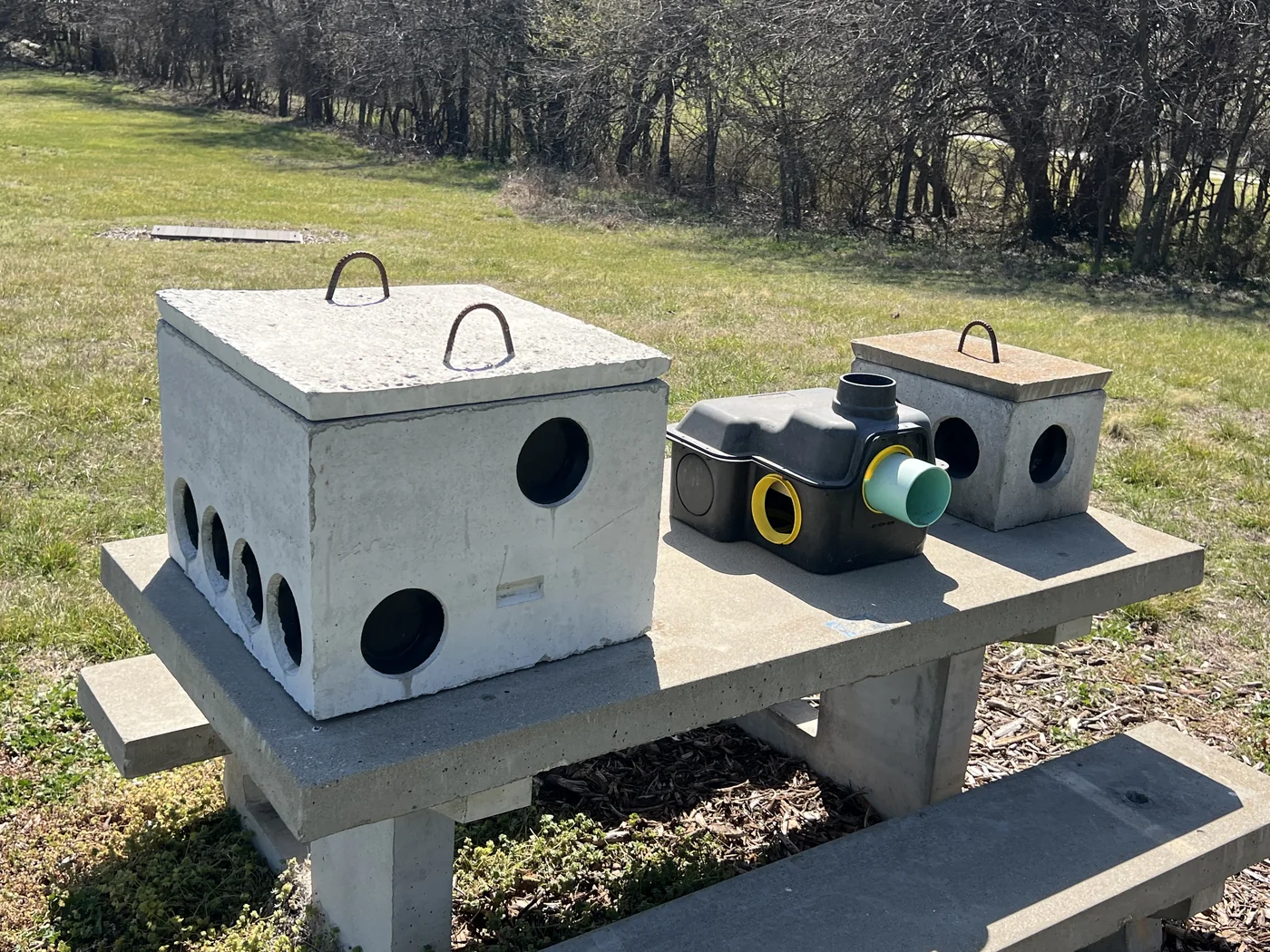
Your septic system relies on the tank, drainfield, and naturally occurring bacteria working together. Small daily habits can help keep that balance intact.
Be careful what goes down the drain
Flush human waste and toilet paper only. Wipes—even those labeled “flushable”—along with paper towels, hygiene products, grease, food scraps, medications, and harsh chemicals can clog components or disrupt the system.
Use water thoughtfully
Too much wastewater at once can overload a system. Fix leaks and consider spreading out laundry and other water-heavy tasks. After prolonged rain, pay attention to slow drainage or pooling around the drainfield.
Protect the ground above the drainfield
Avoid driving, parking, or building over the absorption field. Trees and large shrubs planted too close can send roots into lines. If an area stays wet or develops an odor, have it inspected.
Keep up with maintenance
Routine pumping helps keep solids from leaving the tank. State Line Septic generally recommends an interval of 3–5 years, adjusted for tank size, household use, and inspection findings. If you are unsure when your system was last serviced, ask for an assessment.
Our local team is available to talk through what you are seeing.
Contact State Line Septic