Overview of a Septic System
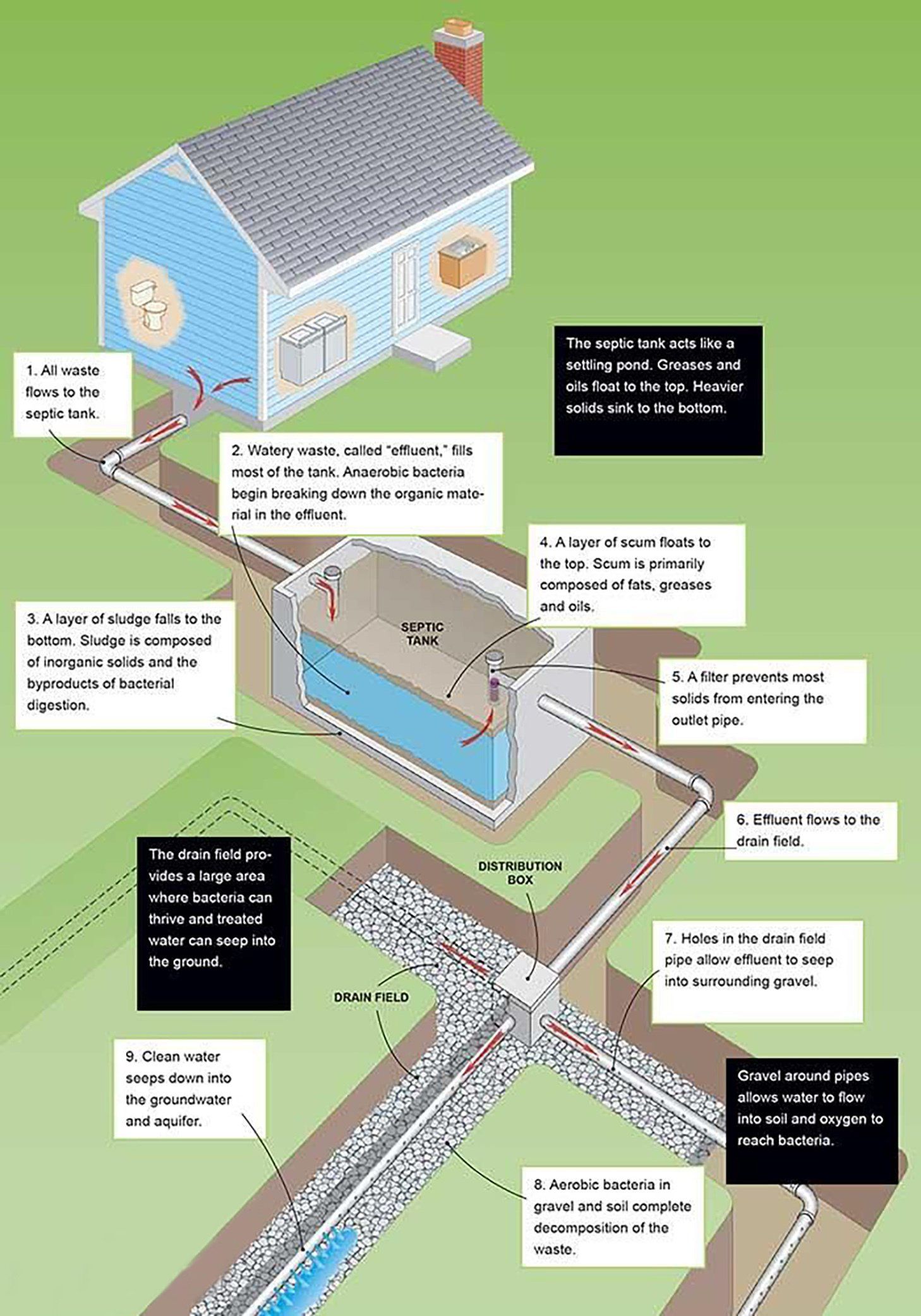
A septic system is an onsite wastewater treatment system commonly used in areas without access to a municipal sewer. A basic septic system consists of two main components: a septic tank and a drainfield (leach field).
Septic Tank
Function: The septic tank holds wastewater long enough for solids to settle and naturally occurring bacteria to help break down waste.
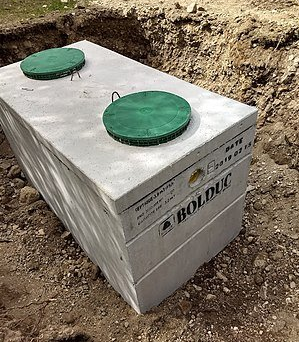
Structure: Septic tanks are buried underground and are commonly made of concrete, fiberglass, or plastic (poly).
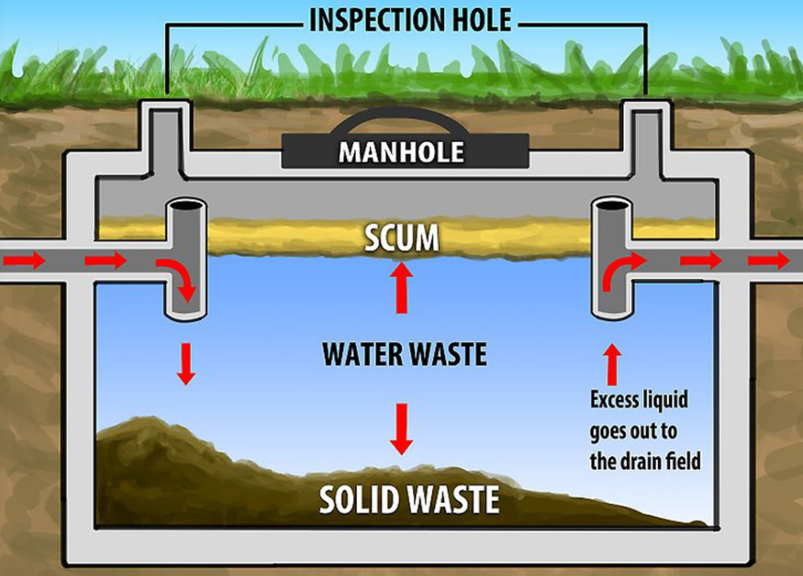
Inside the tank, wastewater separates into three layers:
Scum: Oils, grease, and other materials that float to the top.
Effluent: The liquid layer in the middle.
Sludge: Heavier solids that settle to the bottom.
Baffles
Inlet Baffle: The inlet baffle directs incoming wastewater downward into the tank. This reduces disturbance inside the tank, allowing solids to settle and helping prevent wastewater from flowing too quickly through the system.
A missing or damaged inlet baffle can interfere with how the tank functions and may contribute to system problems.
Outlet Baffle: The outlet baffle helps keep scum, grease, and floating solids inside the septic tank while allowing liquid effluent to flow to the absorption field.
If the outlet baffle is missing or damaged, solids may enter the absorption field, which can cause clogged lines, reduced performance, and premature system failure.
Important: Without proper maintenance, sludge and solids can build up and eventually leave the tank. An effluent filter can provide additional protection by helping prevent solids from entering the absorption field.
Drainfield
Function: After leaving the septic tank, liquid effluent flows into the absorption field for additional treatment.
Structure: Depending on the system design, the absorption field may use perforated pipe installed in gravel, gravel-free systems such as EZflow, or chamber systems.
Treatment: As the effluent moves through the soil, naturally occurring microorganisms help break down contaminants before the wastewater reaches groundwater.
Proper Maintenance Matters
Routine maintenance helps prevent solids from reaching the absorption field and can help extend the life of your septic system. We recommend pumping your tank every 3 to 5 years. This time frame will depend on the size of your tank and number of occupants in the home.
Protecting Your Septic System
Your septic system relies on naturally occurring bacteria to help break down waste. What goes down your drains can have a big impact on how well your system works. To help protect your septic system and absorption field, be mindful of what you flush or rinse down the drain.
When in doubt, only flush human waste and toilet paper.
Never Flush or Put These Items Down Your Drains:
- Baby wipes, even if labeled “flushable”
- Cleaning/disinfecting wipes
- Disposable diapers
- Paper towels
- Cotton swabs/Q-tips
- Cotton balls and makeup-removal pads
- Gauze and bandages
- Feminine hygiene products
- Condoms
- Dental floss
- Hair
- Cat litter
- Cigarettes
- Balloons
- Plastic, wrappers, and other trash
- Coffee grounds
- Cooking oil and grease
- Medications
- Pesticides
- Paint/paint thinner
- Motor oil, gasoline, antifreeze, and other automotive fluids
- Drain cleaners, bleach and other strong chemicals
Other Things to Remember:
- Avoid driving or parking vehicles over your absorption field.
- Avoid planting trees or large shrubs on or near the absorption field where roots could damage the system.
- Conserve water when possible. Excessive water entering the system can overload it and reduce its ability to properly treat wastewater.
- Be mindful when using a garbage disposal. Overuse can cause solids to build up faster, which may require more frequent pumping and increase the risk of solids reaching and damaging the absorption field.